Your car’s braking system is an intricate and important safety network where all components must be working in conjunction. While brake pads get much attention, the rotors-or discs-of your brakes are just as important.
These metal discs are what your brake pads grab onto to create the friction that ultimately stops your automobile. Rotors can develop defects such as warping, grooving, or scoring over time, causing vibrations, noises, and a loss of braking power.
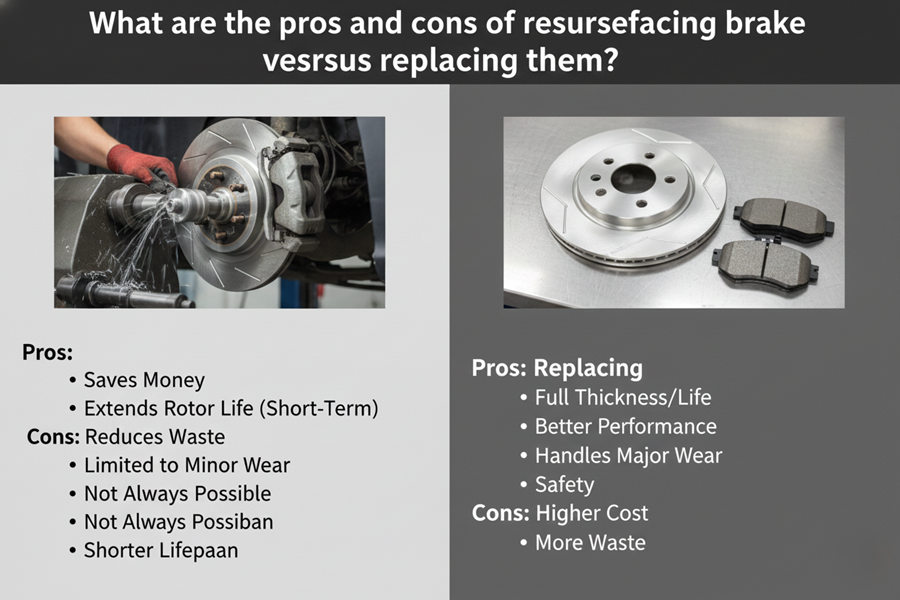
In that case, you have the classic decision to make, common in American brake service, as to whether your rotors should simply be resurfaced or entirely replaced. It’s not only a financial decision but one that will affect your car’s safety,
performance, and long-term value. Understanding the pros and cons of each option will better equip you to make a decision that suits both your vehicle and your budget.
Two key options exist for accomplishing the goal of reestablishing a perfectly flat, smooth surface for the brake pads to make contact with.
What does resurfacing a brake rotor entail?
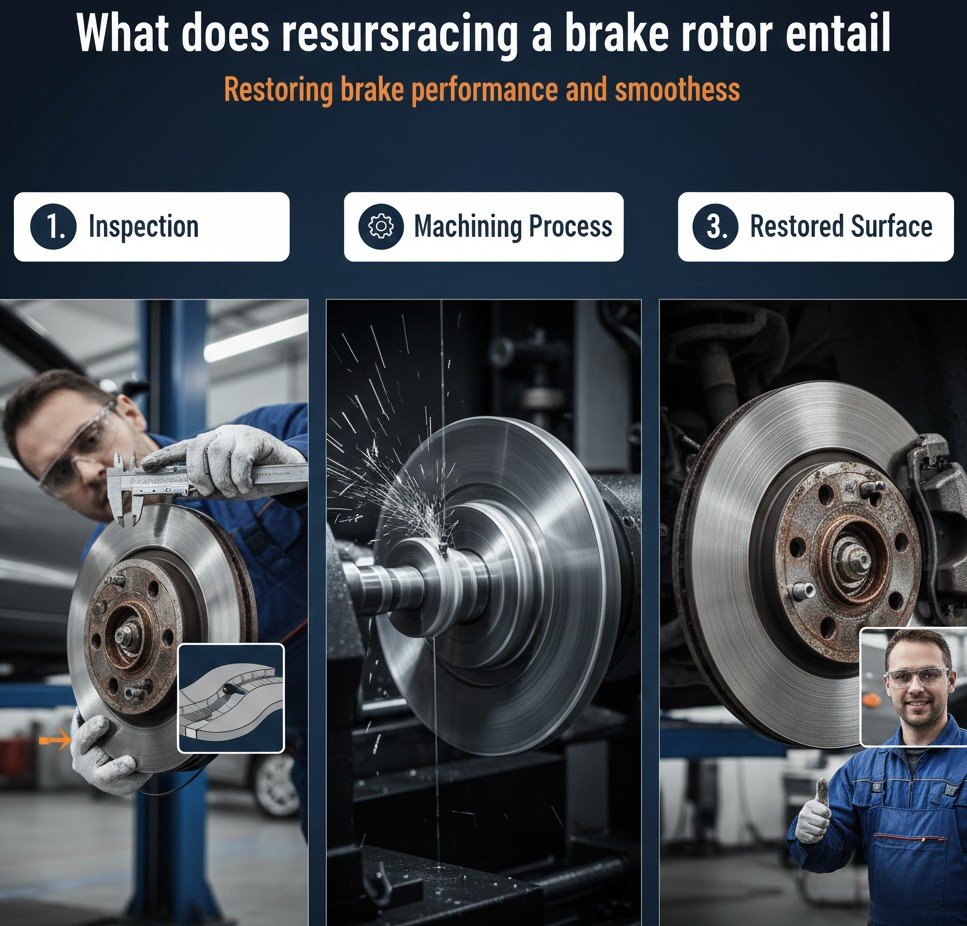
It’s important to understand what is involved with resurfacing before considering the alternatives.
The process, also called resurfacing, machining, or turning, involves cutting a thin layer of metal from the surface of the rotor using a precision lathe.
This way, slight imperfections of the following nature get eliminated:
There may be light scoring or grooves from worn brake pads.
slight distortion that results in brake pedal pulsation
Non-uniform transfer of pad material and surface rust.
The result is a rotor that is now flat and smooth. However this process can only be
performed if the rotor is thick enough to take material off it without compromising its
ability to dissipate heat or its structural integrity. Before accepting the refinishing of
brake rotors, a technician would always check the current thickness of your rotor
because each car manufacturer has a minimum discard thickness that needs to be adhered to.
The Advantages and Disadvantages of Resurfacing Brake Rotors
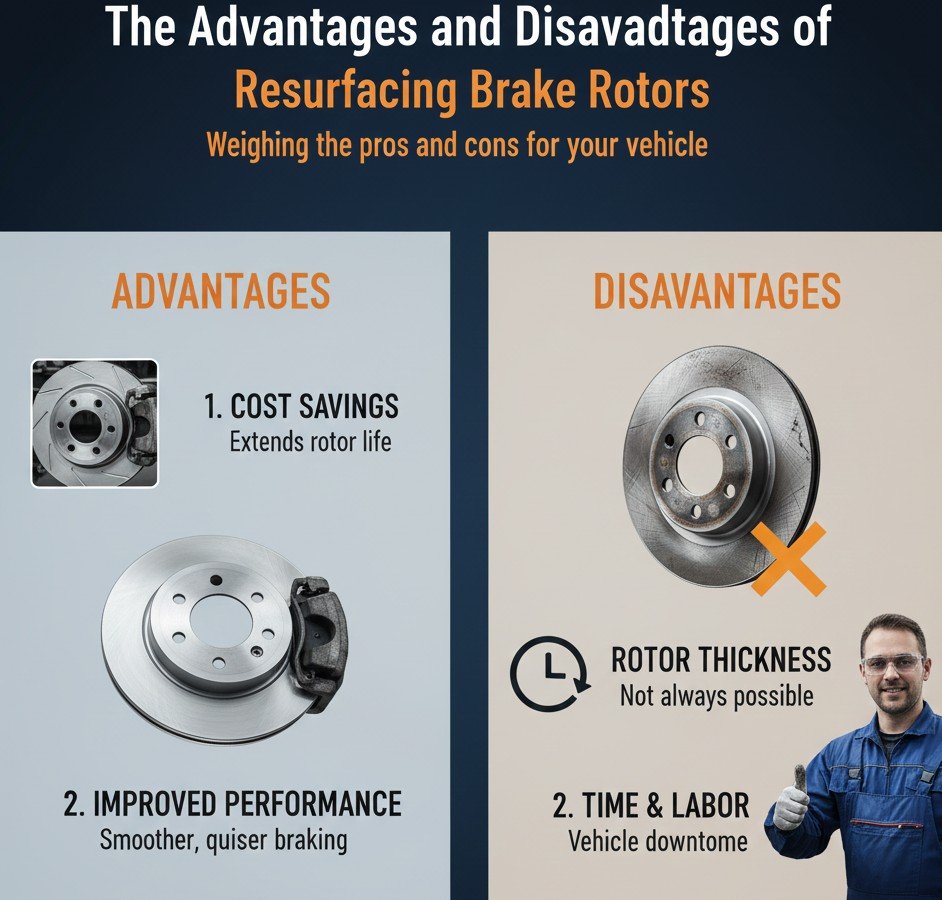
Traditional and often inexpensive, resurfacing has some drawbacks:
Advantages of Resurfacing:
Cheaper: This is the most important benefit. The cost of resurfacing brake rotors is normally a fraction of what you would pay to get new ones, hence making it a desirable alternative for repairs that are conscious of your budget.
Extends Rotor Life: Machining away the damage can get more miles out of your rotors, a process that is good to the environment and your bank account.
Repairs Minor Problems Fundamentally, resurfacing is a great way to repair minor warping, scoring, or uneven surfaces in rotors that are otherwise in good condition.
Proper Bed-In Ensured: The new brake pads will bed in properly on a newly machined surface, improving their life and performance.
Disadvantages of Resurfacing:
Reduces Rotor Life: Removing metal makes the rotor thinner. The reduced mass of a thinner rotor reduces its capacity to absorb and dissipate heat. Operating temperatures increase, thereby increasing the likelihood that it will warp again in the future.
Not all rotors can be resurfaced if the rotor already has deep grooves, or extreme heat spots (that alter the metallurgy of the metal) at or below the manufacturer’s minimum thickness; additionally, any rotors with cracks cannot be resurfaced.
Problems Likely to Occur in the Future: The problems could come back shortly if the machining of the rotor isn’t done correctly, or the cause of the damage (a seized caliper, for example) wasn’t found.
Labor-intensive: While cheaper than replacement, the procedure does require special machinery and a trained technician. This however, does raise the overall labor time in your brake repair cost.
Advantages and Disadvantages of Replacing Brake Rotors
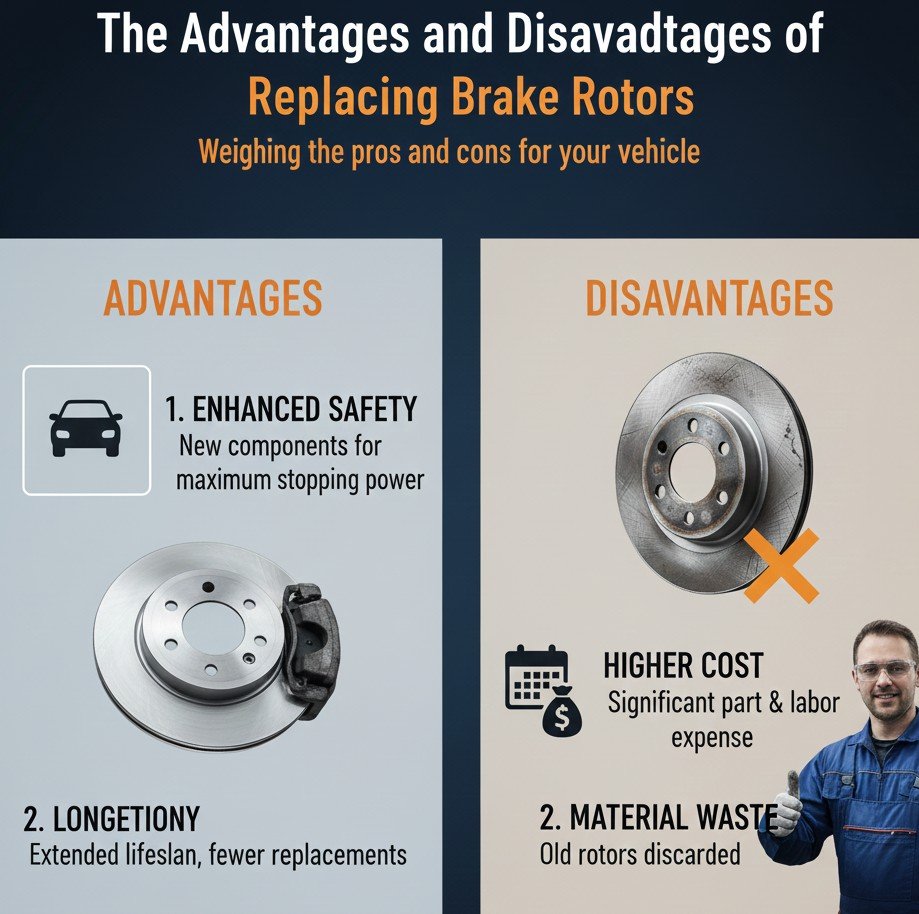
Generally speaking, buying new rotors is usually the better choice, particularly for newer vehicles.
Replacement benefits:
Maximum Braking Performance: New rotors are manufactured to exact specifications, ensuring that there is optimal thickness, heat dissipation, and structural integrity right from the beginning.
Extended Service Life: Since you start with a full-thickness rotor, it will last longer. Moreover, it could be resurfaced in the future, further extending the service life.
Severe Damage Solution: Severe wear, cracks, or warpage can be safely rectified only by the replacement of rotors.
Warranty and Reliability: Most new rotors will have some kind of warranty associated with them, which helps instill confidence. You eliminate the possibility of early failure brought about by worn-out parts.
Improved heat control: The designs of modern rotors often include an array of complex features, difficult to replicate by resurfacing, such as cooling vanes and slotted or drilled surfaces.
Drawbacks of Replacing
Higher Upfront Cost: As you are paying for new components in addition to labor, the cost of replacing the brake rotors is undoubtedly higher.
Pair Correctly: For optimal performance, the new rotors must be compatible with the type of brake pad being installed; ceramic, semi-metallic, etc. and they should be replaced in pairs per axle.
Comparing the Resurfacing and Replacement Costs
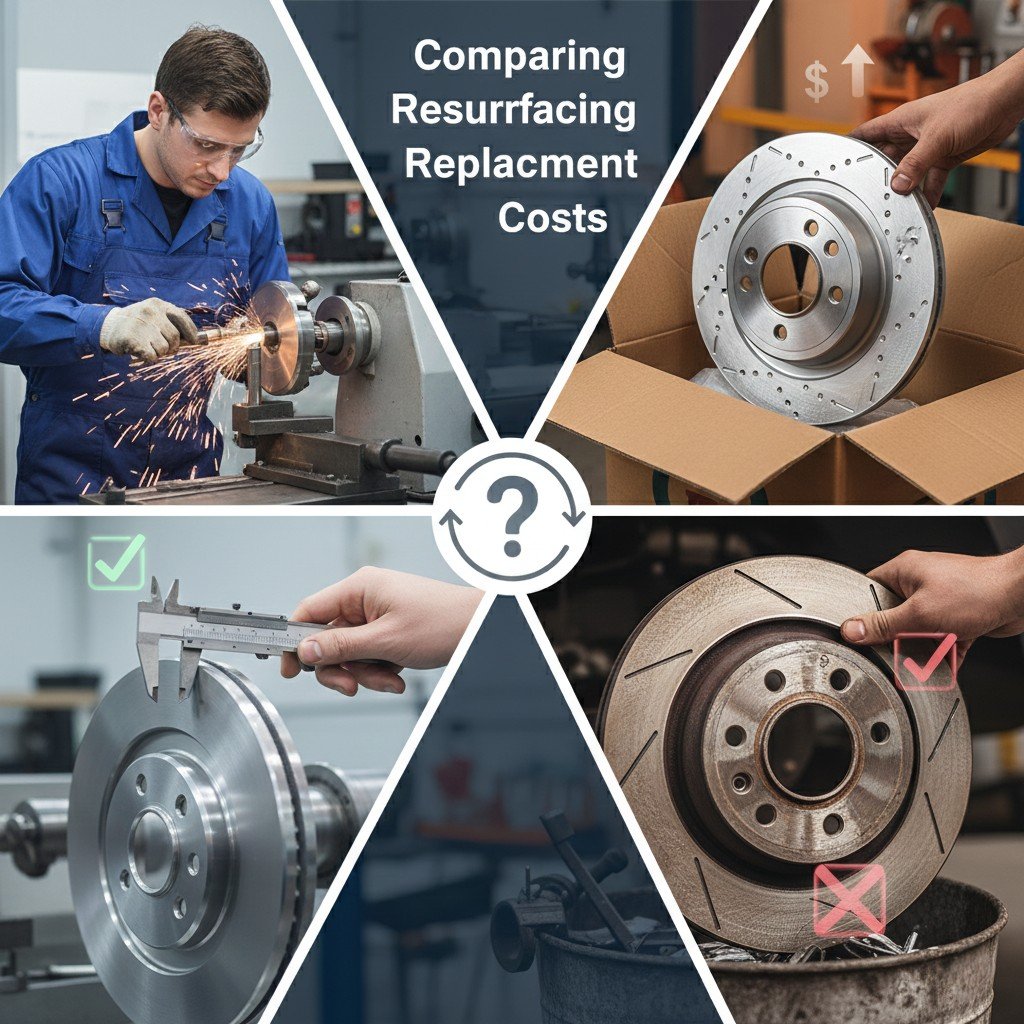
For most car owners, money is going to be a major determining factor in their choice. Here is a general breakdown of how much repairs will cost for each of your options. Prices are per axle and can vary based on location and type of vehicle.
Service
Part Cost
labour expenses
Estimated Overall Cost
Restoring a Rotor
Free to $25 (service fee)
$80-$150
$80–$175
Economical Rotor Replacement
80 to 150 USD
$80 to $150
$160-$300
Premium Rotor Replacement
$150 to over $400
Between $80 and $150
Between $230 to over $550
While resurfacing is cheaper upfront, replacement could be the more cost-effective option down the road if your current rotors are close to the end of their life expectancy, since you wouldn’t have to pay for a resurface now and replacement shortly thereafter.
How to Tell Whether Your Rotors Are Resurfaceable
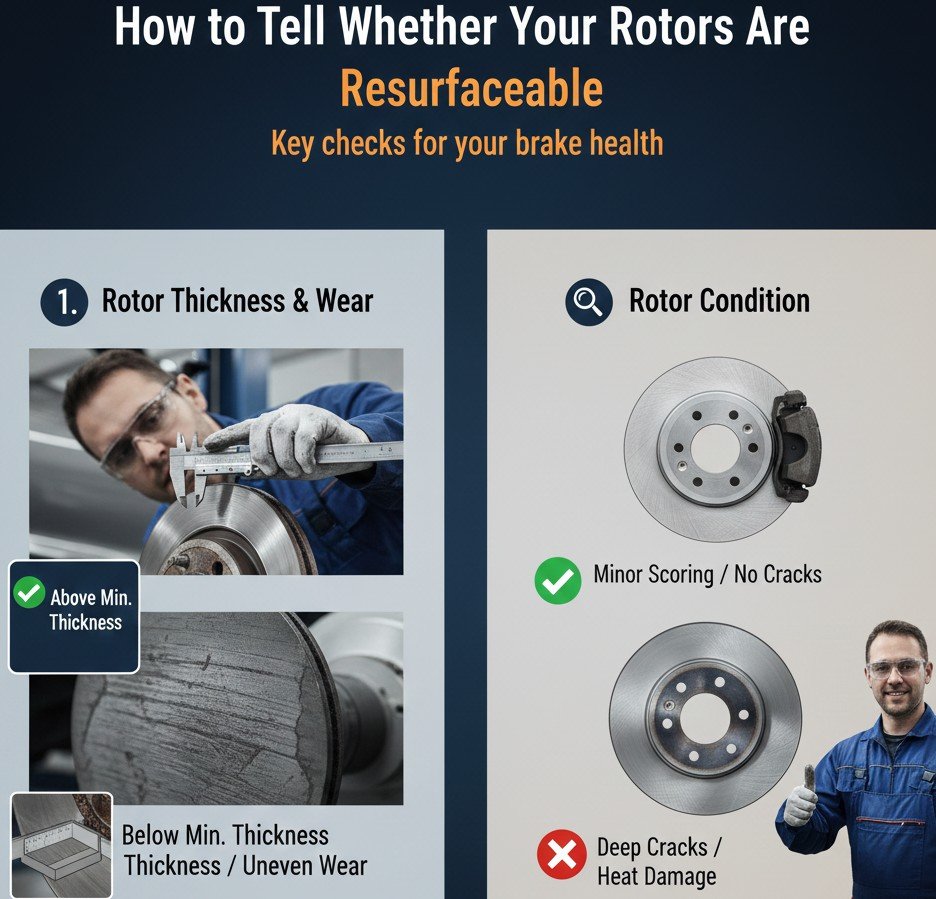
Though a competent mechanic will use a micrometer to take precise measurements, you can understand the specifications they are working to:
Adequate Thickness: The rotor must have enough material to allow for processing and still retain a thickness well above the minimum thickness specified by the manufacturer.
Scoring should not be too deep in order to avoid the rotor becoming dangerously thin.
No Cracks: Any visible crack, no matter how little, disqualifies a surface for resurfacing.
Minimum Heat Spots: If the metal shows blue or purple discoloration then it has been overheated and hardened, which makes it difficult to machine correctly; it will be susceptible to further warped rotor symptoms.
When Resurfacing Should Be Chosen
Resurfacing is a sensible and practical alternative when the conditions are appropriate:
During a Routine Brake Job: If the rotors are in good shape, when new pads are installed, resurfacing will provide a fresh, flat surface for maximum contact.
Minor Damage: When the rotors are still thick and undamaged but you have a little brake pedal pulsation.
Budget Constraints: when the cost of replacement is too high and it is demonstrated that the rotors are well within acceptable limits.
Newer Vehicle with Low Mileage: The rotors on a relatively new car are excellent candidates for resurfacing since they still have lots of life in them.
When It’s Time to Change Rotors
Replacement is often a matter of safety, not just an upgrade. You should always opt for new rotors when:
This is the most important factor: at or below the minimum thickness. A thin rotor is susceptible to overheating and failure.
Severe Scoring or Grooving: If grooves are so deep that they cannot be removed by machining, replacement must be done.
Heat Spots or Visible Cracks: These weaken the rotor’s structural stability.
Severe Pulsation or Vibration: Extreme shaking when braking often signifies pronounced warpage that is not economically feasible to remove by resurfacing.
For the best possible braking performance and longest service life, begin with new components.
Frequently Asked Questions (FAQ)
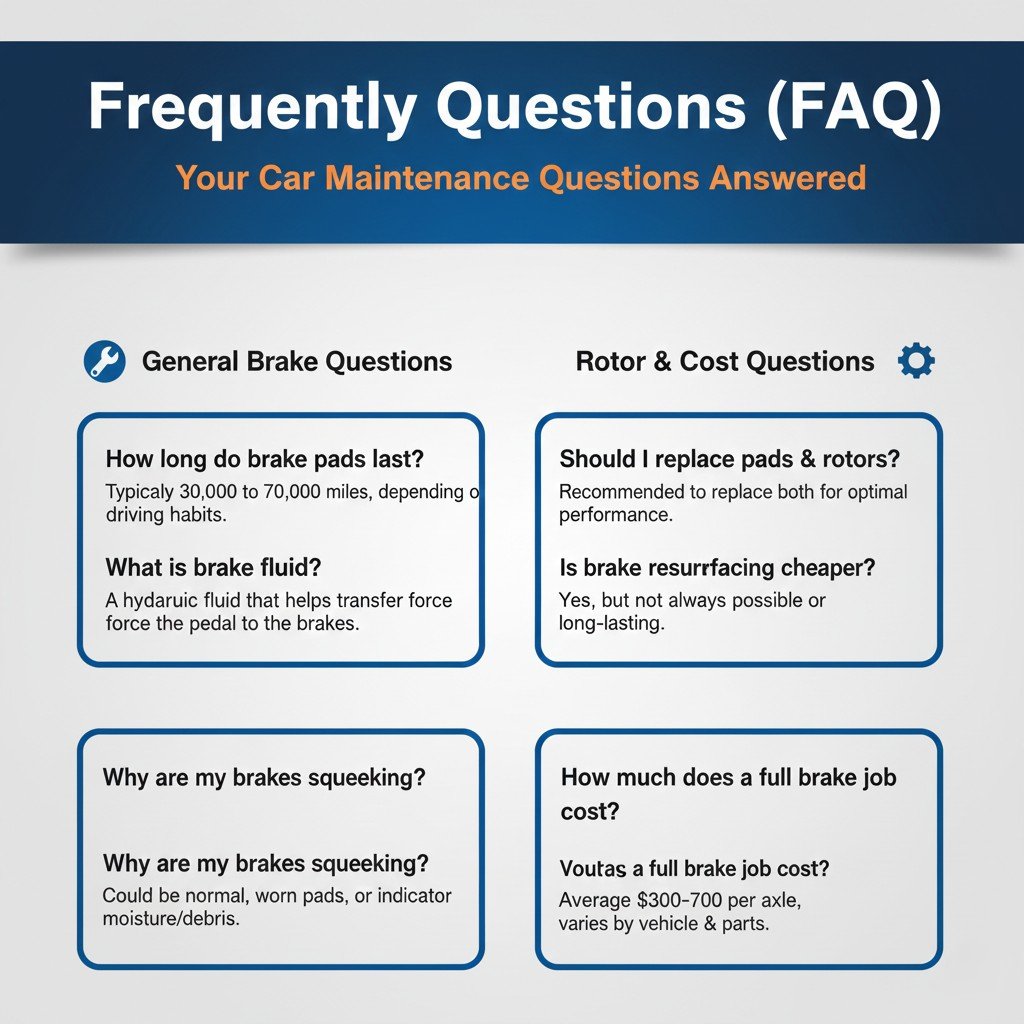
1. Is it safe to resurface rotors?
It is a completely industry-standard and safe procedure if resurfacing is done by a trained technician on a rotor that is considerably thicker than the minimum thickness and free of cracks.
2. When is it possible to refinish brake rotors?
With a few exceptions, rotors can be resurfaced only once, if at all. The only variable is the amount of stuff left. Every time a rotor gets resurfaced, its thickness becomes closer to its minimum safe value.
3. Can the rotor be resurfaced if it’s warped?
Resurfacing can, in fact, repair slight distortions. If the warping is extreme, though, the amount of material that must be removed can render the rotor too thin and require its replacement.
4. Is turning rotors better than buying new ones?
New rotors are superior in all aspects-performance, heat capacity, and life expectancy. They provide a like-new starting point with full thickness and integrity. Resurfacing the rotors is a lower-cost option that can extend the useful life of a still-good component.
5. How Long Does It Take for Resurfaced Rotors to Wear Out?
The lifespan could vary depending on driving style, rotor quality, and the state of other brake parts. A properly resurfaced rotor could be expected to last the life of a set of brake pads, if not longer, provided the rotor was thick enough to start with.
Conclusion: Choose wisely for safety and value.
Resurfacing versus replacing your brake rotors-the decision is never quite cut-and-dried. For moderately worn rotors that still have plenty of life in them, resurfacing is the sensible and cost-effective course of action.
Replacement is the best and most necessary course of action for rotors that are worn out, severely damaged, or otherwise compromised.
The most important step is a professional inspection. A qualified mechanic will inspect your rotor for damage, measure its thickness, as well as give you a straight recommendation based on safety, not just price.
Whether you choose to refinish brake rotors or install new ones, having them meet requirements is important for your safety on the road. The system that brings you to a stop shouldn’t be cut corners.